A rotary cheese grater is one of those kitchen tools that looks simple but makes a real difference once you know how to use it properly. If you’ve ever struggled with a box grater — scraped knuckles, uneven shreds, cheese going everywhere — a rotary grater will change how you cook.
This guide covers everything: how to set it up, the right technique, which cheeses work best, and how to clean it quickly.
What Is a Rotary Cheese Grater?
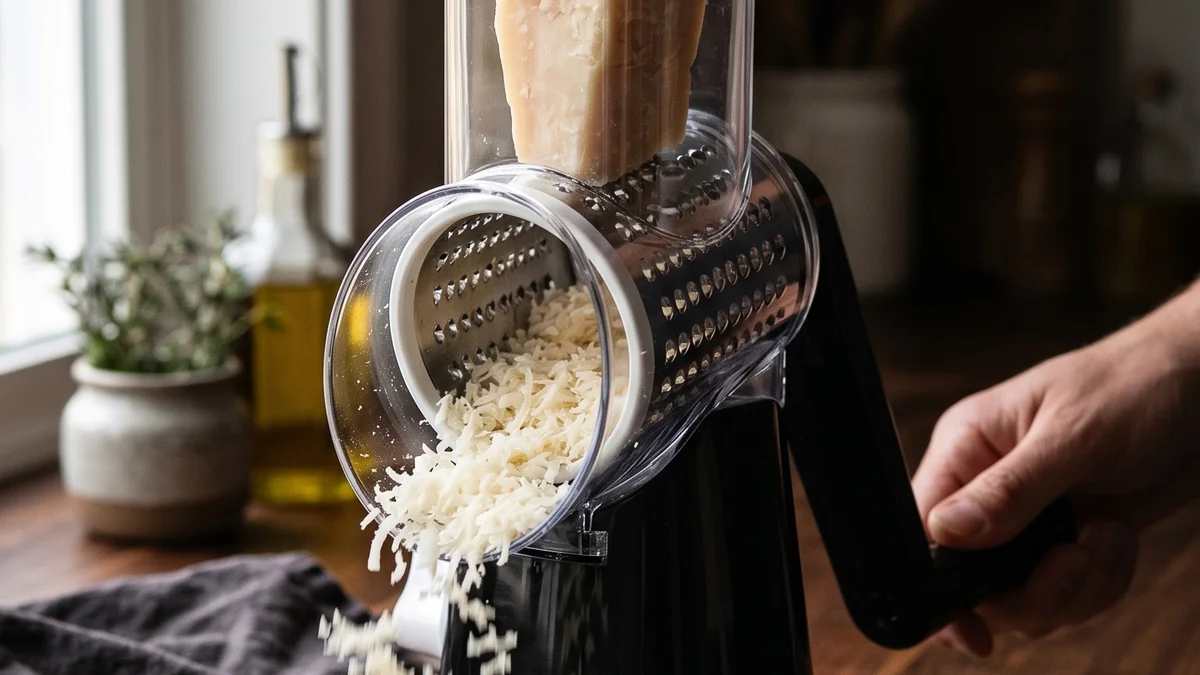
A rotary cheese grater has three main parts: a drum (the cylindrical grating surface), a hopper (where you put the cheese), and a handle that rotates the drum. You press the cheese against the drum, turn the handle, and out come light, fluffy shreds.
Unlike a box grater, the rotary version keeps cheese contained — no mess on the counter, no scrambling for shreds that flew off. It’s also faster for larger quantities and much easier on your knuckles.
Setting Up the Grater
Before you start, select the right drum:
- Fine drum — for Parmesan, Pecorino, hard aged cheeses, chocolate, and lemon zest
- Coarse drum — for semi-firm cheeses like Gruyère, cheddar, and mozzarella
- Slicing drum — for thin slices of firm cheeses
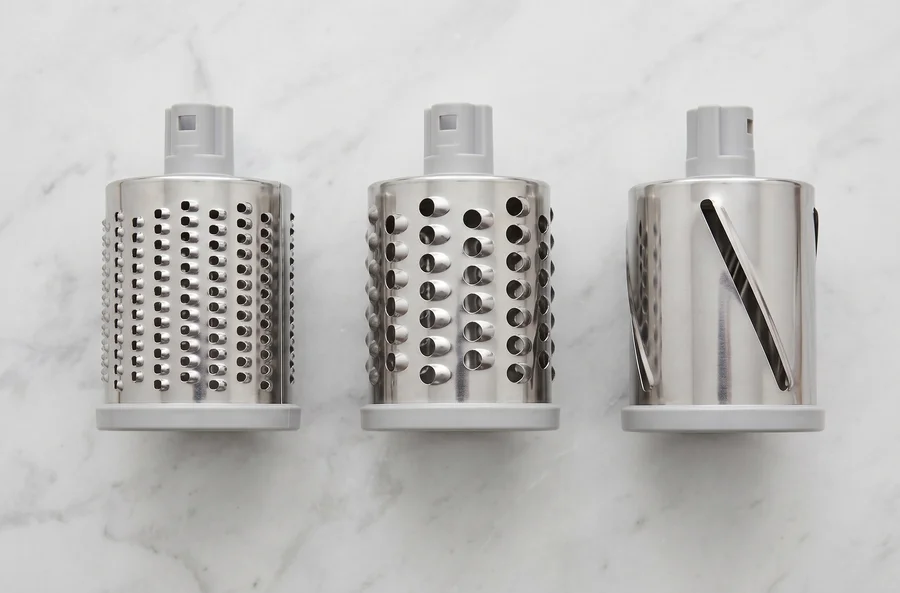
To swap drums: lift the top hopper, slide out the drum, and click in the new one. On the Cambom rotary grater, the process takes under 10 seconds.
How to Use It: Step by Step
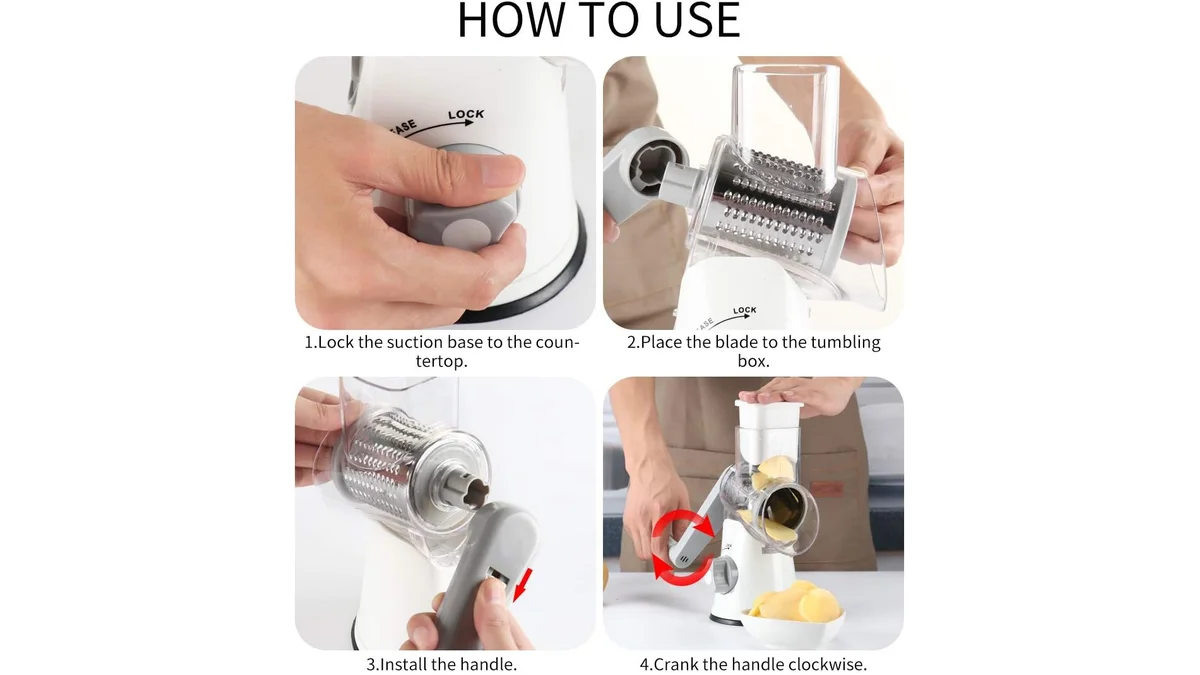
Step 1: Cut the cheese into manageable pieces Cut your block into pieces that fit comfortably in the hopper — roughly 2–3 inches wide. You don’t need perfect shapes; just something that sits in the hopper without wobbling.
Step 2: Lock the suction base (if your grater has one) Place the grater on a stable, clean countertop. Press the suction lever down to lock it in place. This prevents the grater from sliding while you crank — a game-changer compared to holding a box grater.
Step 3: Load the cheese and apply gentle pressure Place the cheese in the hopper and use the top plunger to press it lightly against the drum. You don’t need to press hard — the weight of your hand is usually enough for soft and semi-firm cheeses. For harder cheeses like Parmigiano-Reggiano, apply a little more downward pressure.
Step 4: Turn the handle steadily Crank at a comfortable speed — not too fast. Smooth, even rotation produces consistent shreds. Jerky cranking can cause uneven results or jam the drum.
Step 5: Let gravity do the work Hold a bowl or plate under the grater. Shredded cheese falls directly in. No mess, no spreading across the counter.

The Best Cheeses for a Rotary Grater
| Cheese | Drum | Notes |
|---|---|---|
| Parmigiano-Reggiano | Fine | The classic — light, snowy shreds |
| Pecorino Romano | Fine | Saltier than Parmesan, same technique |
| Grana Padano | Fine | Milder Parmesan alternative |
| Gruyère | Coarse | Semi-firm, melts beautifully |
| Aged Cheddar | Coarse | Works well when cold |
| Mozzarella | Coarse | Must be very cold, nearly frozen |
| Dark Chocolate | Fine | Surprising but excellent on desserts |
| Lemon zest | Fine | Holds the zest without catching the pith |
Common Mistakes and How to Fix Them
Cheese sticking in the drum Almost always caused by warm cheese. Pop it in the freezer for 10–15 minutes before grating. Cold cheese grates cleanly; warm cheese compresses.
Uneven shreds Usually a pressure issue. Try applying more consistent downward pressure with the plunger, and keep your cranking speed steady.
Drum jamming mid-grate This happens with very soft, room-temperature cheese. Again — freeze first. If it jams, reverse the handle a half-turn to release the cheese, then continue.
How to Clean a Rotary Cheese Grater
Clean immediately after use — dried cheese is much harder to remove.
- Disassemble: remove the drum from the hopper
- Rinse under warm water while rotating the drum by hand — this flushes out most cheese
- Use the included cleaning brush to clear any stuck shreds from the drum holes
- The drum, hopper, and plunger are dishwasher-safe (top rack)
- Air dry fully before reassembling
Avoid soaking the drum in water for extended periods, and don’t use metal scourers — they can dull the grating surface over time.
Why a Rotary Grater Beats Pre-Shredded Cheese

Pre-shredded cheese contains anti-caking agents (usually cellulose or potato starch) that prevent it from melting smoothly. Freshly grated cheese melts evenly, sticks to pasta without clumping, and tastes noticeably better.
The five extra minutes of grating pays off every time.
Ready to Try It?
If you’re looking for a reliable rotary grater, the Cambom Rotary Cheese Grater has three interchangeable drums, a suction base, and is fully dishwasher-safe. It has over 26,000 reviews on Amazon with a 4.8-star rating. Buy it on Amazon →